

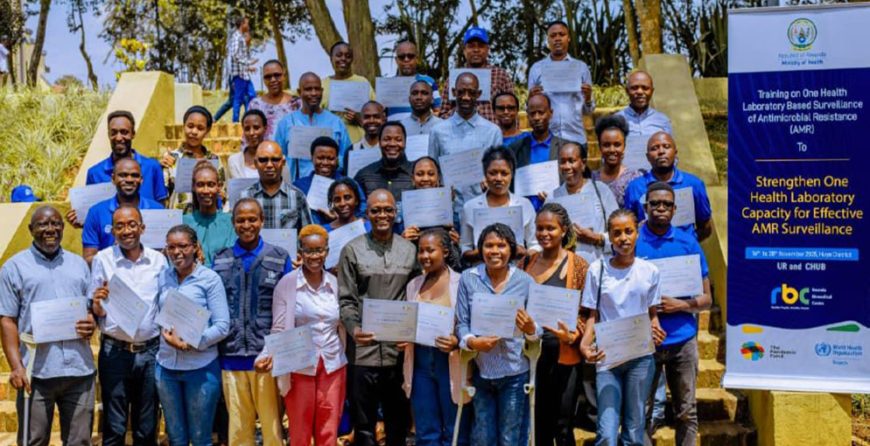
Kigali, Rwanda — Rwanda is strengthening its response to antimicrobial resistance (AMR) through a national laboratory training that enhances surveillance across human and animal health sectors.
Conducted from November 16–28, 2025, in Huye District, the training brought together 30 laboratory professionals from hospitals and veterinary laboratories nationwide. The initiative was led by the Rwanda Biomedical Centre (RBC) through the National Reference Laboratory (NRL), with support from the Pandemic Fund and partners.
AMR—often referred to as a “silent pandemic”—poses a growing global threat. In Rwanda, national efforts are guided by the AMR National Action Plan, which emphasizes improved laboratory capacity, stronger surveillance systems, and coordinated multi-sectoral action.
The training addressed key gaps in AMR surveillance, including variations in testing methods, data management, and coordination between human and animal health systems. Participants received both theoretical and hands-on training in biosafety, microbiological diagnostics, antimicrobial susceptibility testing (AST), and AMR data management using tools such as WHONET.
Through practical sessions, participants conducted sample collection from clinical and animal sources, performed bacterial culture and identification, and applied standardized AST procedures aligned with international guidelines. This hands-on approach ensured the direct application of skills in routine laboratory settings.
A central feature of the training was its One Health approach, fostering collaboration among professionals from different sectors and promoting harmonized laboratory practices across the country.
The training has already yielded positive results, with participants reporting improved technical skills, enhanced ability to detect resistance patterns, and increased capacity to manage and analyze AMR data. It also contributed to the standardization of laboratory procedures, improving the quality and comparability of results nationwide.
Rwanda continues to invest in strengthening laboratory systems, including the establishment of bacteriology laboratories and expansion of veterinary surveillance sites. However, sustained capacity building, reliable supply chains, and strengthened digital systems for real-time data sharing remain critical priorities.
By reinforcing laboratory capacity and cross-sector collaboration, Rwanda is taking important steps to improve early detection, monitoring, and response to antimicrobial resistance—protecting public health and preserving the effectiveness of life-saving treatments.