

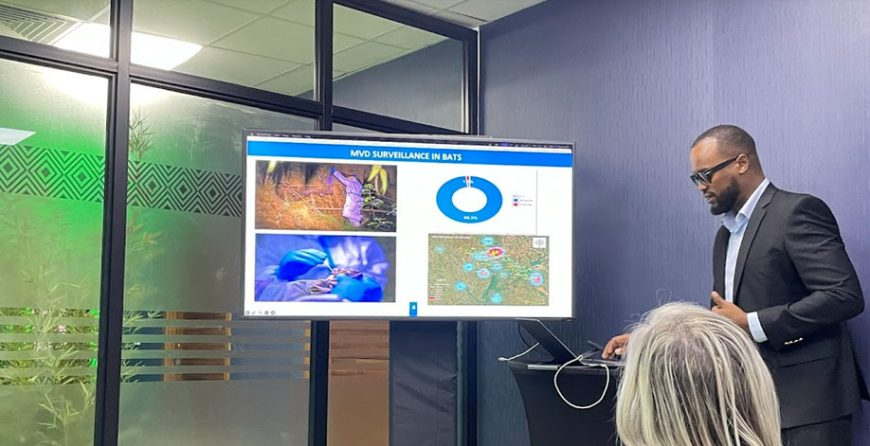
Kigali, Rwanda – 18 November 2025 Rwanda’s commitment to strengthening pandemic preparedness and response was on full display as members of the Pandemic Fund Governing Board visited the National Health Intelligence Center (NHIC) in Kigali. The visit formed part of a broader site tour showcasing the country’s progress in operationalizing a multisectoral One Health approach to health security.
The NHIC, a flagship initiative of the Rwanda Biomedical Centre (RBC), serves as a national digital hub for integrating and analyzing health data across human, animal, and environmental sectors. During the visit, delegates observed firsthand how Rwanda is leveraging real-time data and advanced analytics to enhance early detection, reporting, and response to public health threats.
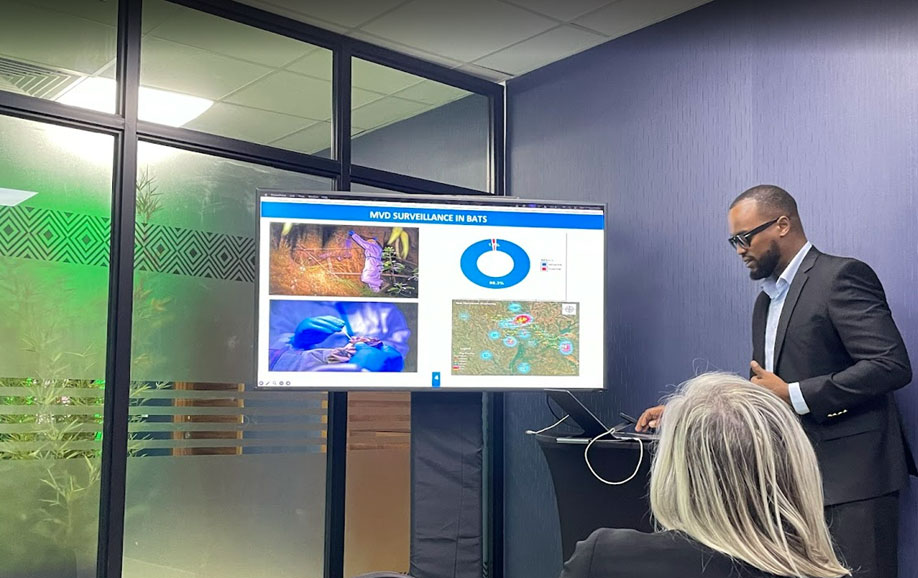
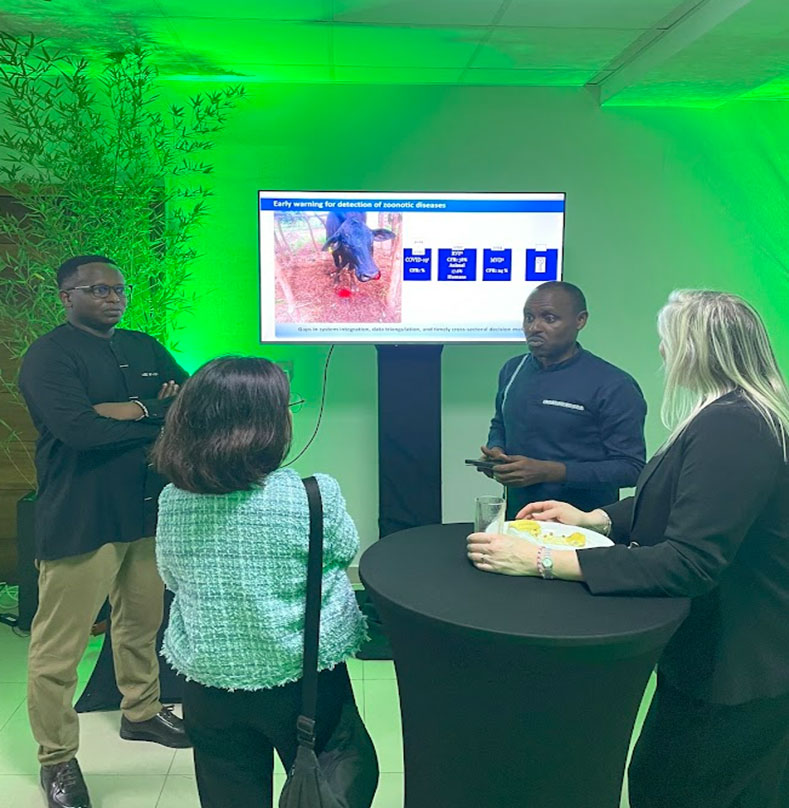
Pandemic Fund Governing Board members review poster presentations at the National Health Intelligence Center (NHIC) in Kigali, showcasing Rwanda’s innovations in integrated surveillance and One Health approaches
A key highlight of the visit was the demonstration of the IMPURUZA electronic event-based surveillance system, which has been deployed nationwide to strengthen community-level reporting and rapid response. Board members were also introduced to the integration of laboratory information systems (LIS) and indicator-based surveillance, illustrating how multiple data streams converge to support evidence-based decision-making.
Guided tours led by NHIC and surveillance technical teams provided insights into the Center’s daily operations, including data visualization dashboards, outbreak monitoring tools, and coordination mechanisms that link national and subnational levels. The visit emphasized how Rwanda’s surveillance ecosystem connects frontline health workers, laboratories, and policymakers within a unified platform.
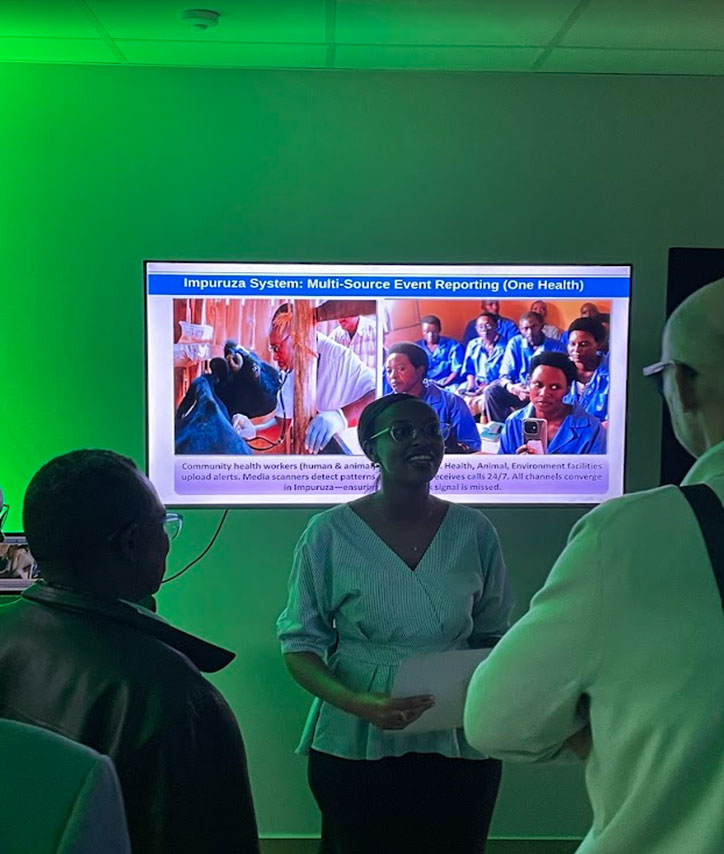
In addition to the tour, participants engaged in a series of poster presentations highlighting key areas of Rwanda’s pandemic preparedness efforts. Topics included surveillance of Marburg Virus Disease, One Health collaboration under the Integrated Disease Surveillance and Response (IDSR) framework, and regional coordination through the Greater Virunga Transboundary Collaboration (GVTC). These sessions underscored Rwanda’s leadership in fostering cross-border and multidisciplinary approaches to health security.
The NHIC visit demonstrated how digital innovation is transforming public health systems in Rwanda. By integrating diverse data sources and strengthening collaboration across sectors, the country is building a resilient and responsive surveillance system capable of addressing emerging health threats.
The visit concluded with a reaffirmation of Rwanda’s role as a regional leader in pandemic preparedness and a model for implementing the One Health approach in practice. Insights from the NHIC are expected to inform global efforts supported by the Pandemic Fund, as countries seek scalable and sustainable solutions to strengthen health security systems.