On 26 June, Rwanda joined the rest of the world in celebrating the International Day against Drug Abuse and Illicit Trafficking to showcase the progress made in curbing the rise of alcohol and drug use in Rwandan society.
Over the past few years, Rwanda has embarked on a journey to reduce alcohol and drug use after the latest Non-Communicable Disease Risk Factor Survey showed an increase in drug abuse and substance use leading to health problems such as cancer, metabolic diseases and a range of mental health conditions.
The results of the survey suggest a 7% increase in alcohol consumption in ten years, from 41% in 2013 to 48% in 2022, with the youth population highlighted as the most vulnerable.
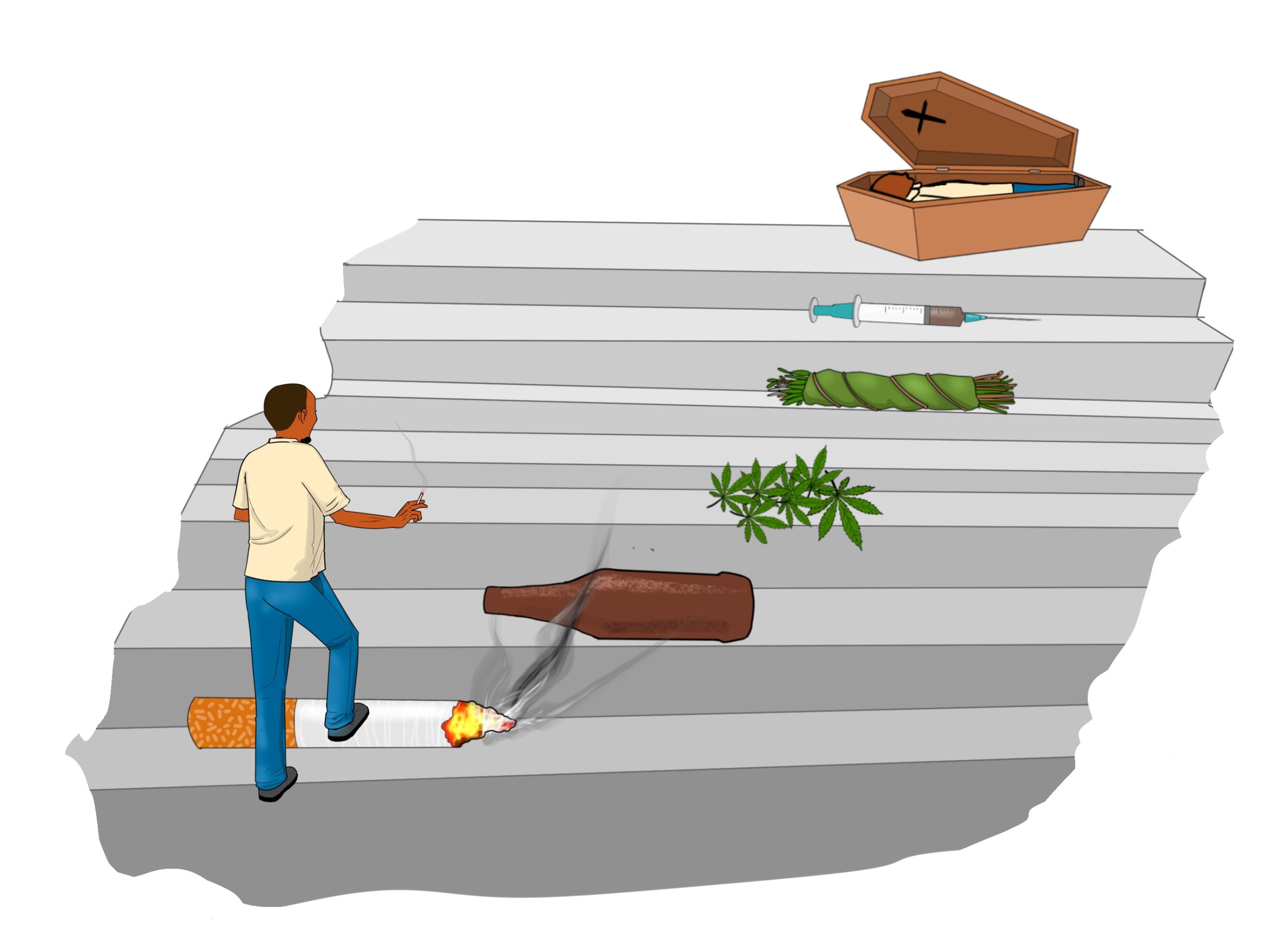
Another study found that alcohol and cannabis are the most commonly used substances among young people, and that alcohol and drug use are associated with unprotected sexual practice. The 30-day prevalence of alcohol, cannabis and other illicit drug use was 31.6%, 5.3% and 0.9%, respectively. The mean age at first use was 13 years for alcohol and cannabis and 16 years for other drugs. This study shows that adolescence and young adulthood remain a critical period for substance use.
Among the measures taken by the Rwandan government to combat the excessive use of alcohol and other substances is the Tunywe-less campaign, launched in 2022, which uses a variety of means to reach out to people and encourage them to stop or reduce their alcohol consumption.
Some young people who have tried these drugs at an early age cite parental misbehaviour and conflicts at home as the main risk factors.
“Growing up, I found out that my father had disowned and rejected me. I sought solace in my peers, who later influenced me to try cannabis.” said a former cannabis addict – a young woman from Gasabo district who preferred to remain anonymous. Sadly, she became infected with HIV during her time of drug abuse.
The young woman was rescued by the authorities, who admitted her to the rehabilitation centre for counselling and psychological treatment. “I was taken to a rehab centre and taken care of by good listening teachers who told us the effects of drugs…luckily I was doing drugs against my will so I pushed hard to recover and thanks to prayers and psychologists now I am drug free”. She said and added: “Drugs kill, I testify to it because it hinders your thinking and you cannot have any development”.
The young woman now earns money as a hairdresser, a profession she learnt during her rehabilitation, and urges parents to come to their senses and do what is necessary. “I urge parents to maintain order in their families by promoting positive education, talking to their children and avoiding fights at home as this is likely to lead children to drugs”.
News