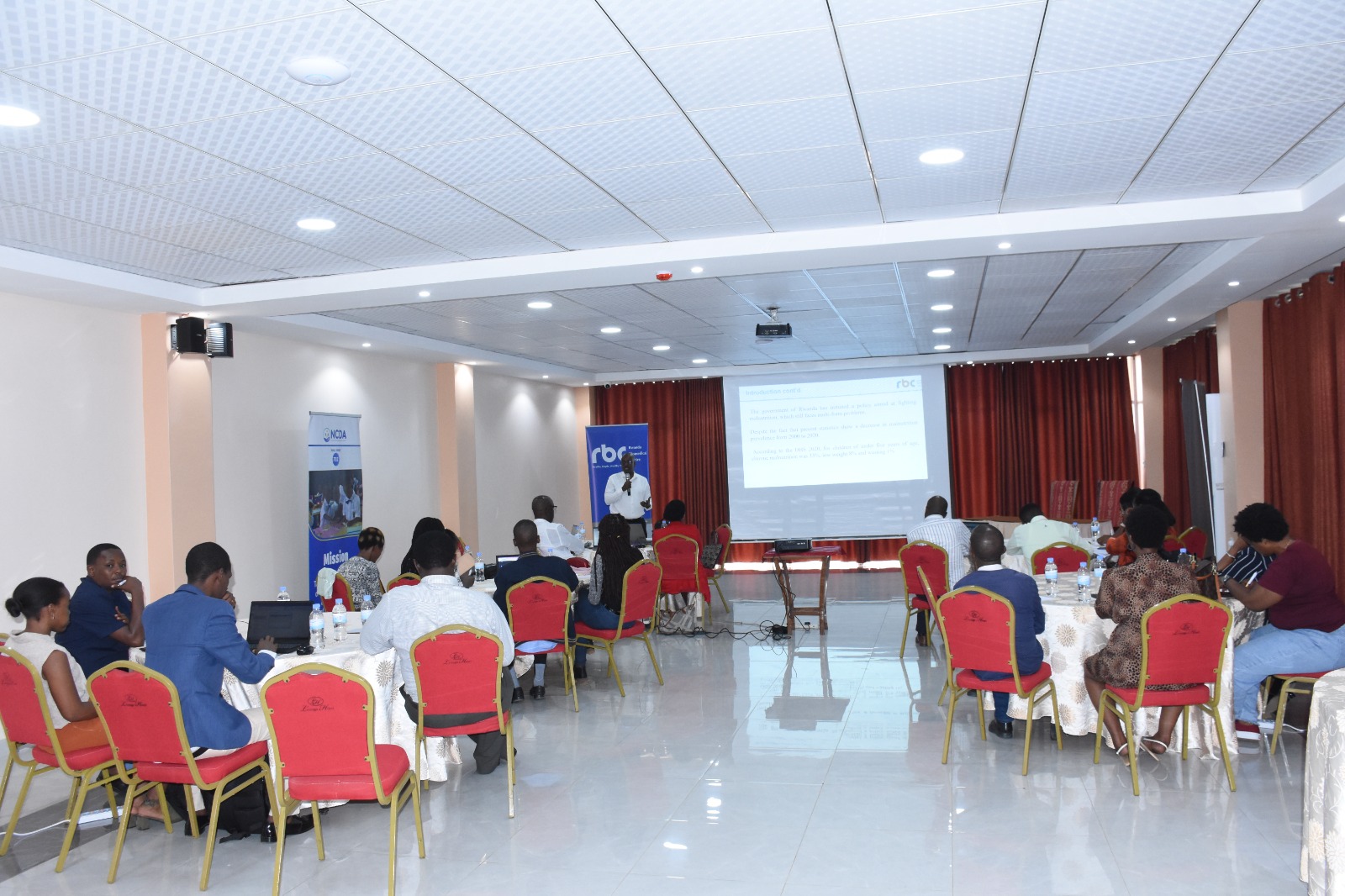
Rwanda Biomedical Centre (RBC) collaborated with National Centre for Child Development NCDA and partners engaged over 20 media practitioners on their role in promoting breastfeeding practices ahead of the world breastfeeding week slated in the beginning of August under the theme “Closing the gap: breastfeeding support for all“.
After seeing the decrease in percentage of the exclusive breastfeeding under six months from 87.3% in 2015 to 80.9% in 2020 according to the 2020 Rwanda Demographic Health Survey report and the decline of exclusive breastfeeding at 4-5 months from 80.8% in 2015 to 68.1% in 2020. Mothers start introducing complementary foods at 4-5 months. Also, the same survey showed that the percentage of Children 6-23 months meeting the minimum meal frequency has decreased from 47.2% to 45.6% from 2015 to 2020; this is a proxy indicator that optimal breastfeeding, including the frequency of breastfeeding, has also reduced.
With the forementioned alarming figures, Rwanda Biomedical Centre and its partners looks to increased awareness, knowledge and skills among breastfeeding mothers on optimal breastfeeding practices; remind Spouses and other family members, communities the benefit of optimal breastfeeding practices and how to support breastfeeding mothers; ensure healthcare providers are informed on ways to support adoption of optimal breastfeeding practices; dispatch advocacy message on favorable environmental for breastfeeding spaces, provided to the employers and community members and in public life; ensure Opinion leaders (civil society, media, private sector) are engaged to support optimal breastfeeding and respect for women’s autonomy and their right to breastfeed anytime, anywhere.

To achieve this, journalists who are the backbone in the awareness process need to engage more in this cause using their platforms and privilege to reaching a wider community are called up on joining this movement. Speaking on the occasion Justin Ntaganda, the Nutrition Technical Advisor in Maternal, Child and Community Health Division at Rwanda Biomedical Centre(RBC) noted Rwanda made tremendous strides by putting programs and initiatives intended to reduce stunting and malnutrition and calls for more collaboration especially in addressing the myths and misconceptions around breastfeeding practices.

“The government of Rwanda set reducing malnutrition and stunting as a health priority in our communities through different nutrition interventions, everyone has a role to play to make the lives of children and mothers even better through good practices of breastfeeding.’’
To effectively participate in the elimination of stunting and malnutrition through encouraging breastfeeding, media are cordially requested to mainly focus on informing the community the benefits of immediate breastfeeding in the first hour of birth, Exclusive breastfeeding within first 6 months and complimentary breastfeeding.
Media has also a role to play in addressing Myths and Misconceptions about breastfeeding by highlighting Scientific and research Evidences on breastfeeding including its benefits; Encouraging Breastfeeding-Friendly Workplaces, Supporting Breastfeeding in Public Spaces and calling for Male engagement and family support in breastfeeding

Emma Marie Umurerwa from iribanews highlighted media personnel’s social responsibility towards building a healthy workforce saying:” No person who can stand seeing children with stunting status with their lowest brain capacity as a result of missing out the chance of getting a healthy breastfeeding. Media and government institutions, that promote children’s wellbeing, their mutual collaboration is strongly recommended.”