


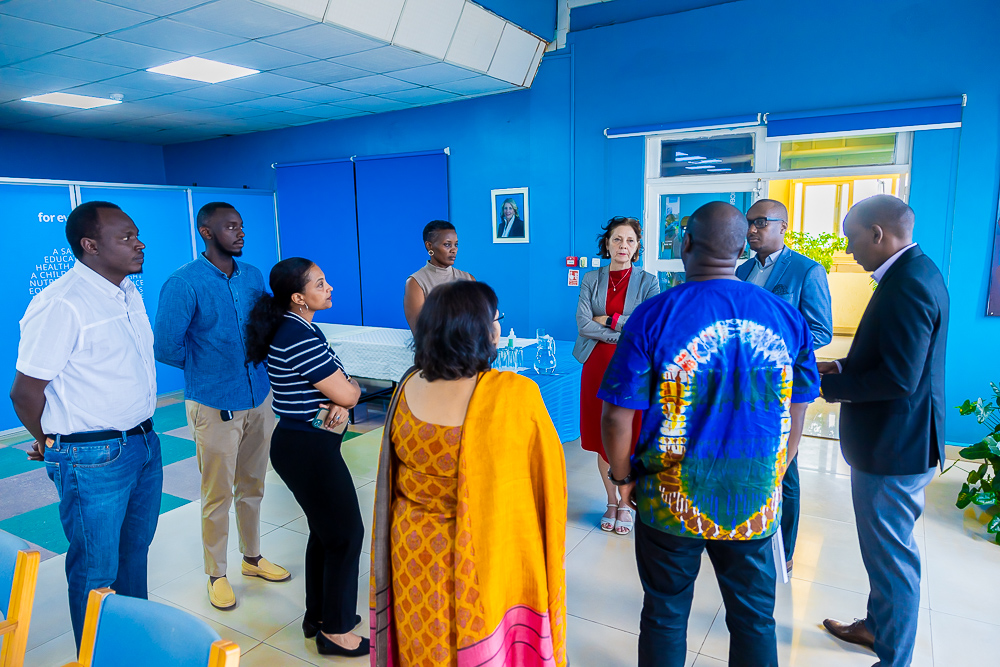
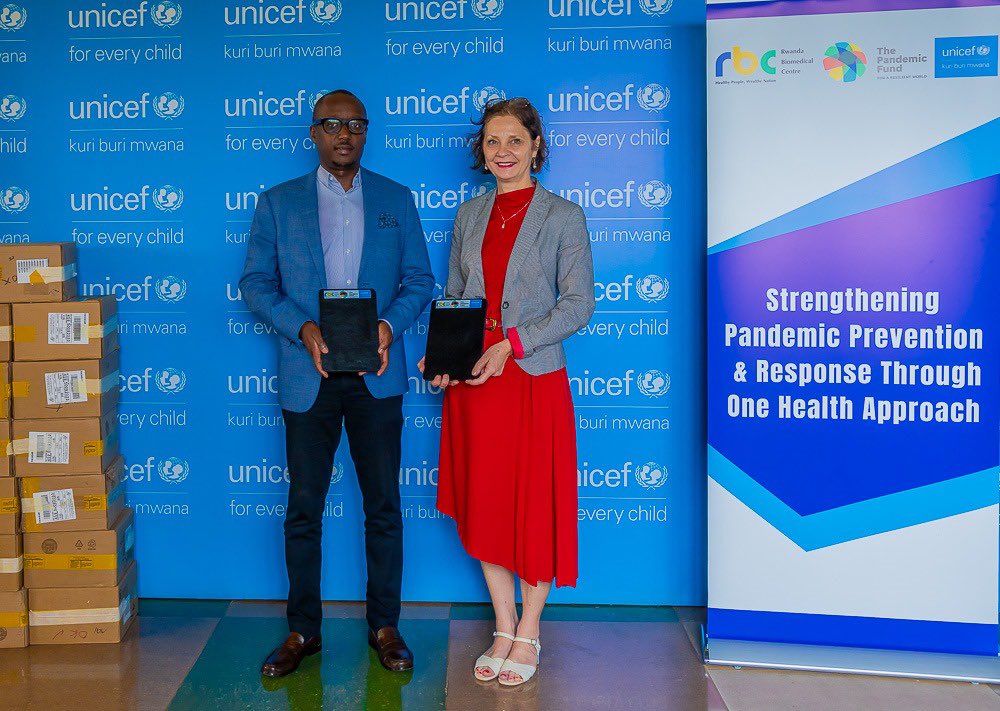
17 July 2025 | Kigali, Rwanda – In a move to enhance real-time disease surveillance and response across Rwanda, Rwanda Biomedical Centre (RBC) received over 615 tablets from UNICEF to support data collection and reporting in primary health care facilities across the country. The event took place at the UNICEF Rwanda offices and was attended by senior officials from both institutions.
The tablets were procured under the project – Strengthening Pandemic Prevention & Response through One Health Approach in Rwanda (SPPROHRW), a joint initiative supported by the Pandemic Fund aimed at strengthening Rwanda’s pandemic preparedness and response systems, with a focus on primary health care (PHC) service delivery. These devices will be used to facilitate timely and accurate reporting from 515 health centers and 100 health posts, in all the 30 districts of Rwanda.
The tablets will be equipped with the Impuruza system, an electronic surveillance tool designed to streamline data entry, improve the quality of health reporting, and support evidence-based decision-making at all levels.

As part of SPPROHRW, approximately 60,000 Community Health Workers nationwide will receive training to ensure the effective use and integration of this new epidemiological surveillance tool.
Speaking during the handover, UNICEF Rwanda Representative, Ms. Lieke van de Wiel, highlighted the importance of investing in digital tools to strengthen public health systems. “With this support, we’re empowering Rwanda’s frontline health workers with tools that improve the speed and accuracy of disease surveillance, especially in times of crisis, and reaching the last mile.”
Prof. Claude Mambo Muvunyi, Director General of the Rwanda Biomedical Centre, commended the partnership between UNICEF and RBC and emphasized the government’s commitment to improving national health resilience. “Strengthening our surveillance capacity is critical for early warning and rapid response. These tablets will go a long way in helping us detect, report, and respond to health threats before they become outbreaks.”
The event is part of a broader set of activities supported by SPPROHRW, including e-learning tools for health workers, quarterly surveillance review meetings, and capacity building for community health workers and border staff.