

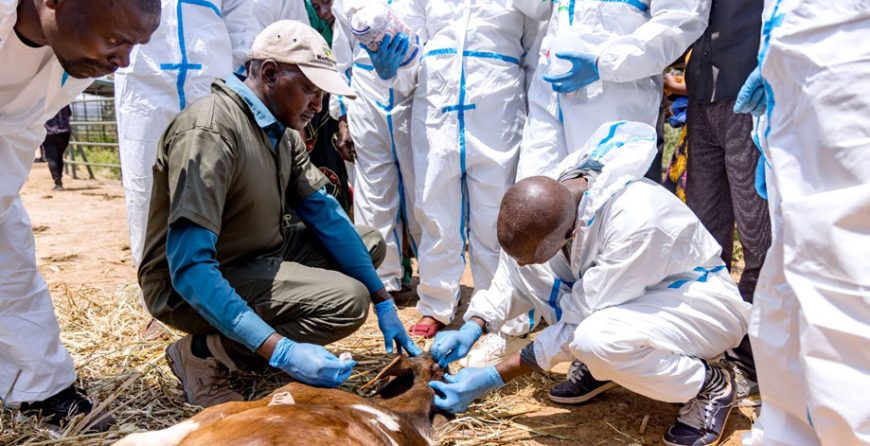
The Food and Agriculture Organization of the United Nations (FAO), in partnership with the Government of Rwanda, is reinforcing the country’s preparedness against health threats by strengthening the capacity of frontline animal health workers. Through the Pandemic Fund country project “Strengthening Pandemic Prevention, Preparedness & Response Through a One Health Approach in Rwanda,” FAO is equipping communities with tools to detect and respond to potential disease outbreaks at their source.
In Bugesera District, FAO facilitated training for 50 Trainers of Trainers (TOTs), including community animal health workers. The training focused on Event-Based Surveillance (EBS), a critical early warning system designed to identify unusual health events in animal populations that could signal the emergence of diseases.
These trainers will cascade knowledge and skills to colleagues across 13 districts: Nyagatare, Gatsibo, Kayonza, Ngoma, Bugesera, Kirehe, Ngororero, Rutsiro, Nyamasheke, Rusizi, Nyabihu, Rubavu, and Rwamagana. This community-driven approach ensures that disease detection begins at the grassroots, where livestock keepers and health workers interact daily with animal populations.
The initiative embodies the One Health approach, recognizing the interconnectedness of animal, human, and environmental health. Many emerging infectious diseases are zoonotic, transmitted between animals and humans, making frontline vigilance crucial for protecting public health. By enhancing early detection and rapid response, FAO and partners are not only safeguarding livestock and livelihoods but also reinforcing Rwanda’s ability to respond swiftly to potential pandemics.
Timely reporting of unusual animal health events allows response teams to contain threats before they spread. This safeguards rural livelihoods heavily dependent on livestock, protects national food security, and reduces the risk of diseases crossing into human populations.
By investing in training, surveillance, and knowledge-sharing, FAO is helping Rwanda build resilient agricultural and food systems that can withstand the challenges of emerging health threats. This work directly contributes to national and global health security, ensuring communities remain safe and economies remain stable.
Ends.