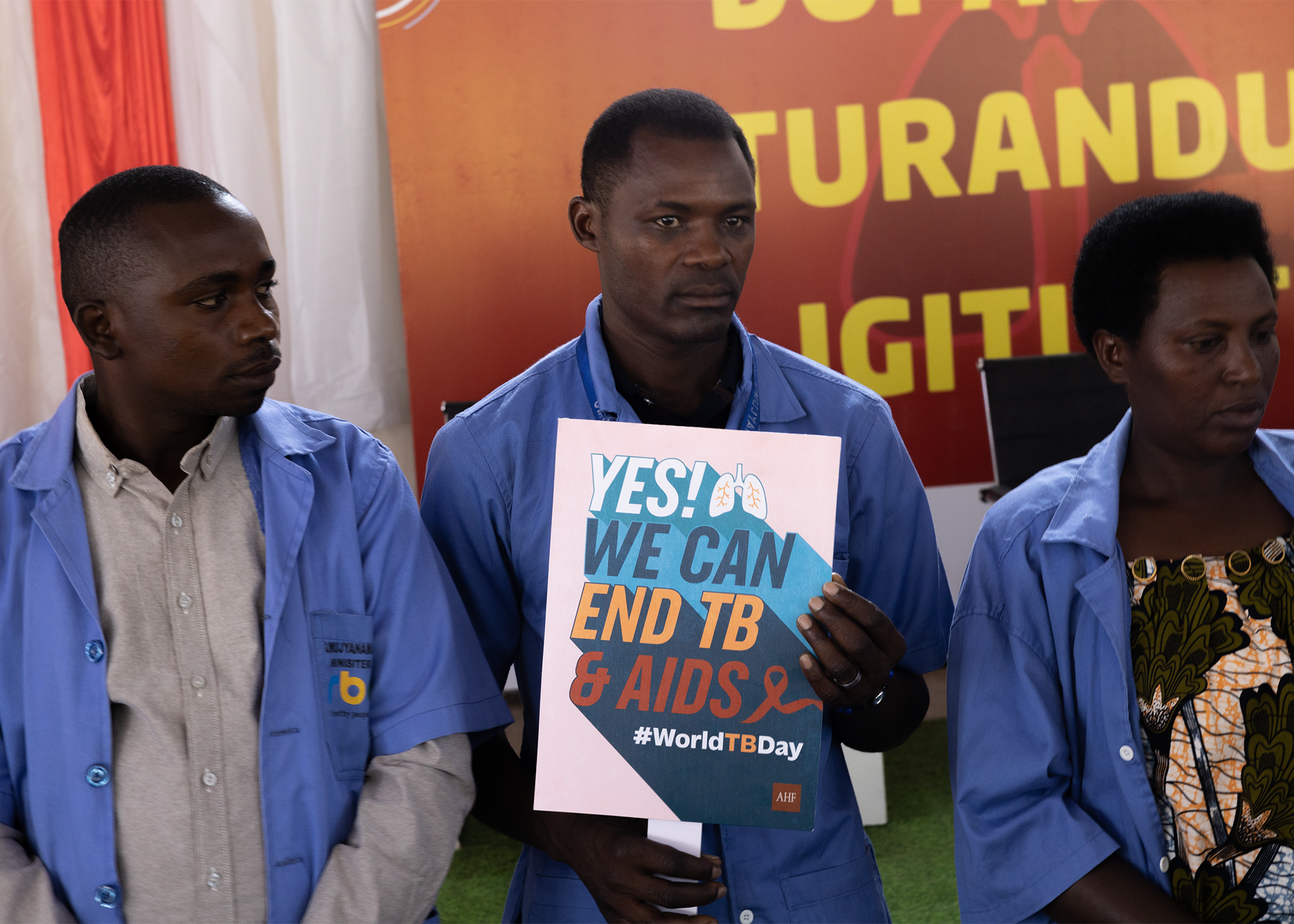
Kayonza, 24 March 2025 – Rwanda joined the global community in marking World TB Day under the theme “Yes! We Can End TB: Commit, Invest, Deliver”, reaffirming the country’s commitment to ensuring universal access to TB services, with free diagnosis and treatment for all.
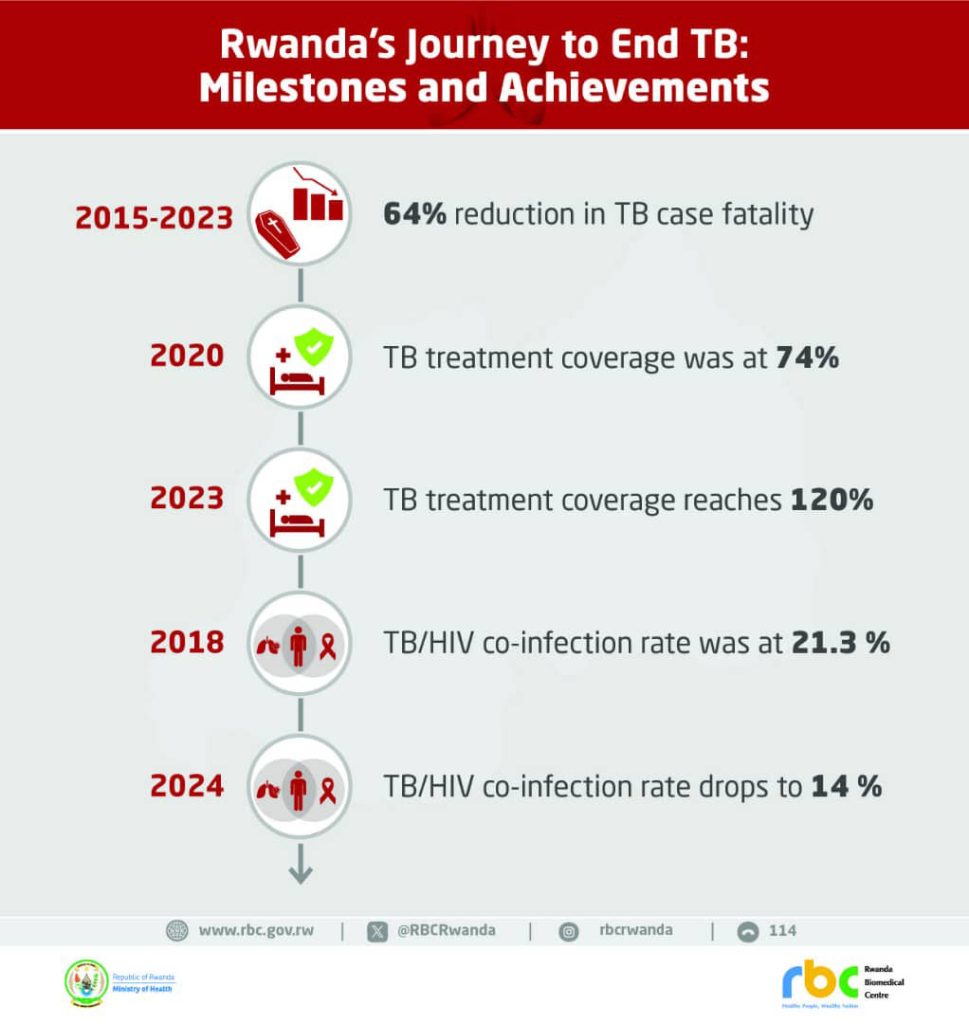
Rwanda’s commitment to ending TB is reflected in the increase in treatment coverage from 74% in 2020 to 120% in 2023, alongside a 64% reduction in TB case fatality between 2015 and 2023. The country has also made remarkable progress in Tuberculosis Preventive Therapy (TPT) through nationwide expansion and continuous mentorship. By the end of 2024, 96.4% of all PLHIV enrolled in the HIV program had initiated TPT since 2019, achieving a high treatment completion rate of 96.6%. As a result, the TB/HIV co-infection rate dropped from 21.3% in 2018 to 14% in 2024, demonstrating the success of the “Treat All” strategy and expanded access to TPT.
Advancing TB Research and Innovation
A study on digitally supported universal screening and testing of household contacts by Community Health Workers (CHWs) confirmed that community-based TB screening is feasible and cost-effective, improving access to testing. Among 601 household contacts, 85% provided sputum samples, and 48% were identified as presumptive TB cases using digital tools—compared to 34% under routine practice. Universal testing doubled TB case detection, preventing missed diagnoses among asymptomatic contacts. Additionally, digitalizing CHWs improved data management, real-time reporting, and household contact identification using verified government data. It also enhanced screening adherence, sample labeling, and tracking, strengthening TB diagnosis and follow-up.
Rwanda has strengthened its surveillance system to ensure data-driven decision-making in TB management. Findings revealed that paucibacillary TB samples lower the positive predictive value of Xpert MTB/RIF Ultra for rifampicin resistance detection in low-prevalence settings. Among 129 RR-TB cases diagnosed by Ultra, 68% had unconfirmed rifampicin resistance, with only 11% confirmed as true RR-TB through reference testing. False resistance was highest (89%) in samples with very low bacillary load, leading to 53% of patients receiving unnecessary RR-TB treatment. These insights are guiding adjustments to Rwanda’s diagnostic algorithms to enhance treatment accuracy.
Community Health Workers recognized
The contribution of Community Health Workers (CHWs) to TB elimination remains inspirational. Beyond leading community-based TB screening, CHWs play a key role in patient follow-up, ensuring treatment adherence and providing necessary support. As part of the World TB Day celebrations, top-performing CHWs from 15 health centers in Kayonza District were recognized and awarded bicycles to facilitate their regular patient visits.

Survivor’s voice
The impact of TB action is not only reflected in numbers but also in the stories of those who have benefited. Gahutu Justin, a resident of Kayonza District, shared how timely diagnosis and accessible community-based services saved his life:
“I spent four months battling severe illness, trying traditional medicine, before I decided to seek medical attention at a health center. As soon as I was diagnosed with TB, I started treatment. Thanks to proper follow-up by Community Health Workers and the health center, I made a full recovery. Today, I can testify that early detection, adherence to prescribed medication, and following doctors’ advice are key to overcoming this disease. TB is preventable, treatable, and curable.”
Moving Forward
Rwanda’s commitment to ending TB targets high-risk populations, expanding preventive therapy, enhancing innovative screening approaches, and ensuring universal access to care. With significant progress in TB research and digital health solutions, the country remains dedicated to early detection, treatment, and prevention. By sustaining these efforts, Rwanda is on the right path to eliminating TB and securing a healthier future for all.